How to spot a Gravestone Doji
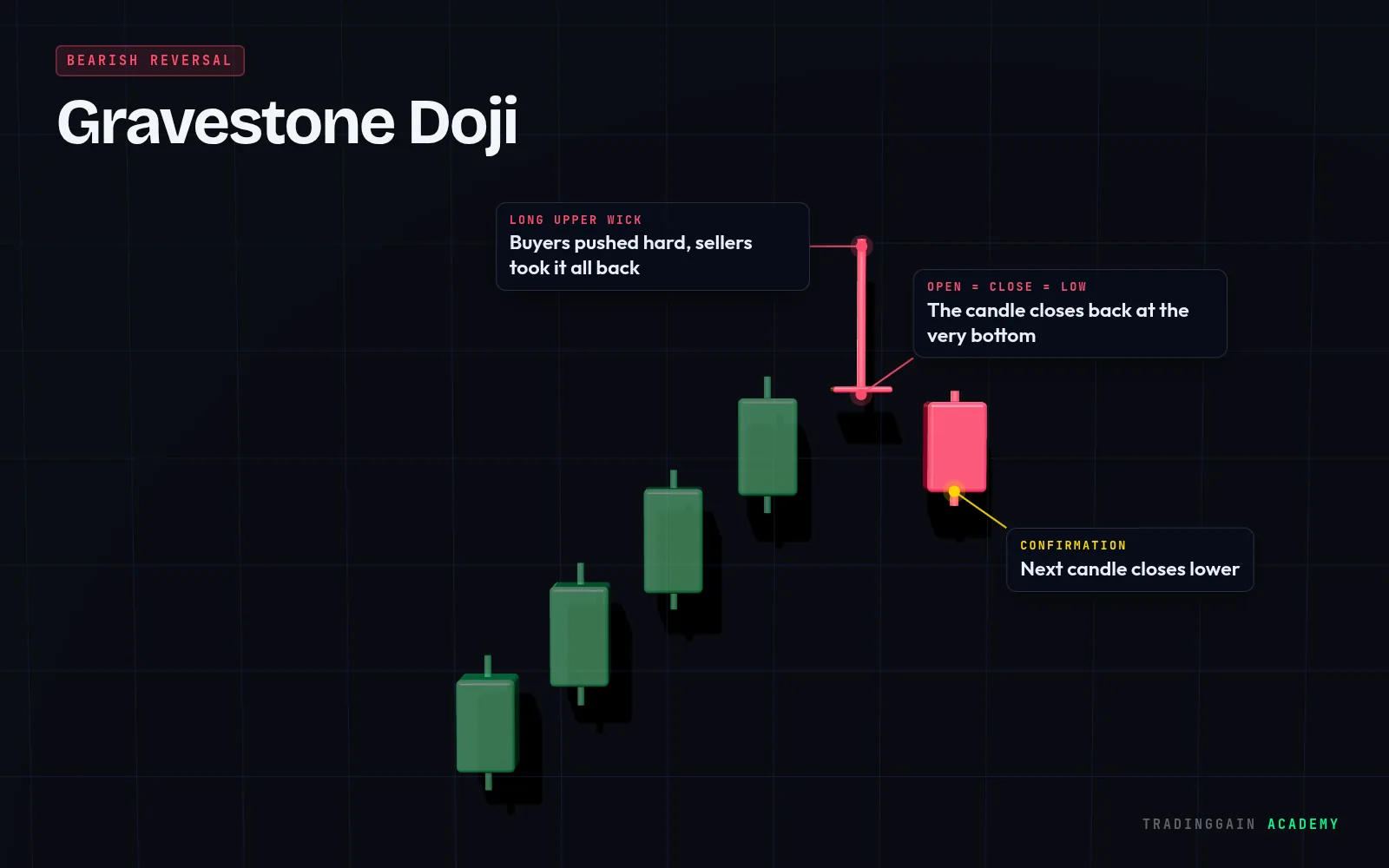
- Open, close and low are almost equal
- A long upper wick and little or no lower wick
- Most meaningful after a rally or at resistance
What the Gravestone Doji tells you
Buyers pushed price well up during the period, but sellers pushed it all the way back down by the close. After a rally, that rejection of higher prices can be an early warning that buying is running out.
How traders use it
- Wait for the next candle to close below the gravestone low
- Enter short or exit longs after confirmation
- Place the stop above the top of the upper wick
Common mistakes
- Shorting a strong uptrend just because of one candle
- Ignoring where the candle formed
- Skipping confirmation
 See it on a real chart · EP 01Candlestick Patterns for BeginnersWatch the free lesson →
Questions about the Gravestone Doji
Is a gravestone doji bearish?
It is usually read as bearish after a rally or at resistance, because sellers rejected higher prices. Wait for the next candle to confirm.
Gravestone doji vs shooting star?
Both have long upper wicks. A shooting star has a small visible body near the low, while a gravestone doji has almost no body.
For education only, not financial advice. The chart is an illustration of the pattern, not real market data. No pattern works every time; always use a stop-loss.