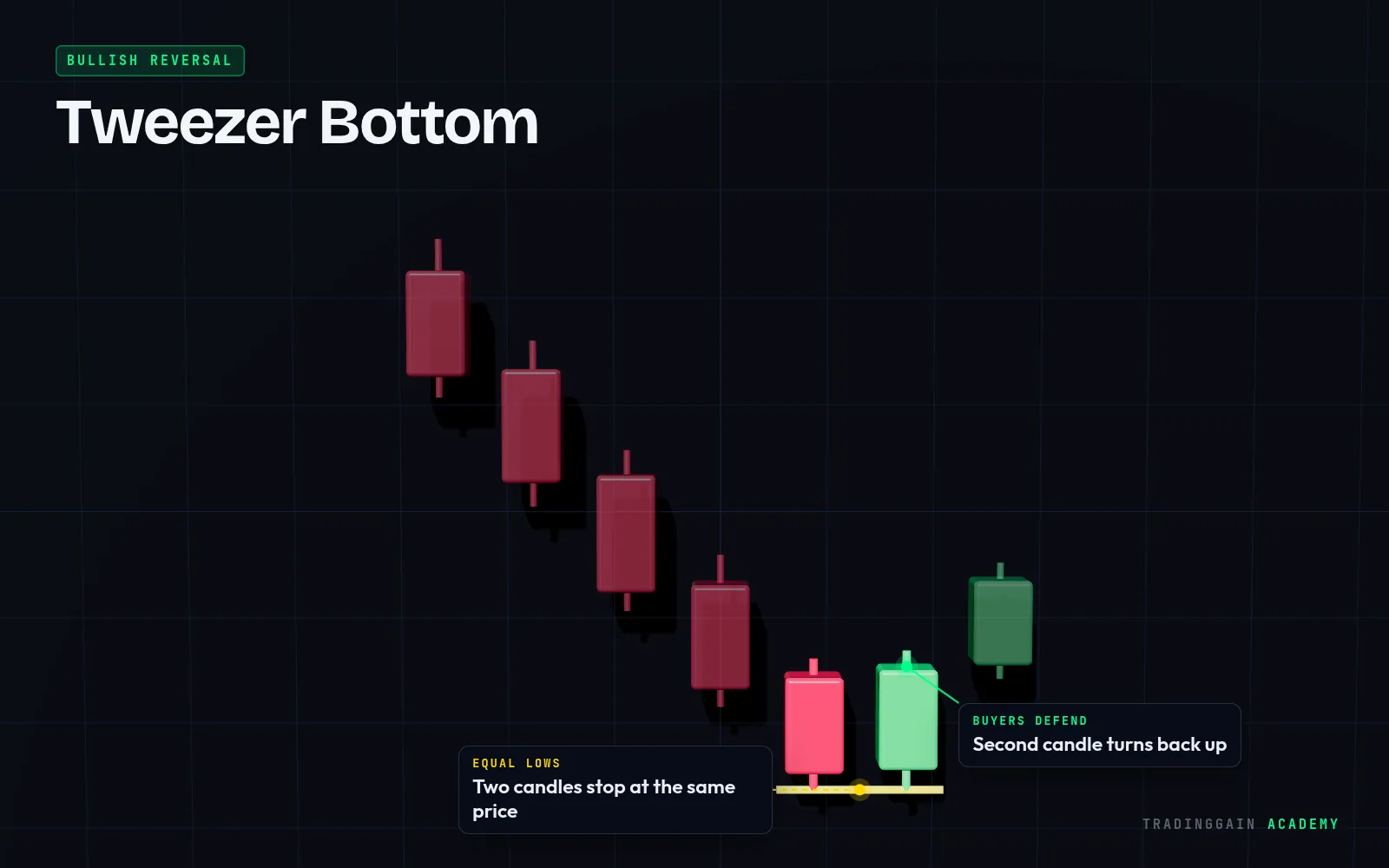
How to spot a Tweezer Bottom
- Appears after a decline
- Two candles with nearly equal lows
- The second candle often closes higher
What the Tweezer Bottom tells you
Price tested the same low twice and buyers defended it both times. That repeated rejection shows a level that sellers could not break.
How traders use it
- Enter after the second candle closes up, or on a confirming candle
- Place the stop below the shared low
- Target the next resistance
Common mistakes
- Ignoring the fact that equal lows also attract stop-losses
- Trading it without a bigger support zone
- Entering before the second candle closes
 See it on a real chart · EP 01Candlestick Patterns for BeginnersWatch the free lesson →
Questions about the Tweezer Bottom
What is a tweezer bottom?
It is a bullish reversal where two consecutive candles stop at the same low, showing buyers defending that price.
Is a tweezer bottom reliable?
It is more reliable at a known support level and when the second candle closes strongly. Equal lows can also be swept, so a stop is essential.
For education only, not financial advice. The chart is an illustration of the pattern, not real market data. No pattern works every time; always use a stop-loss.