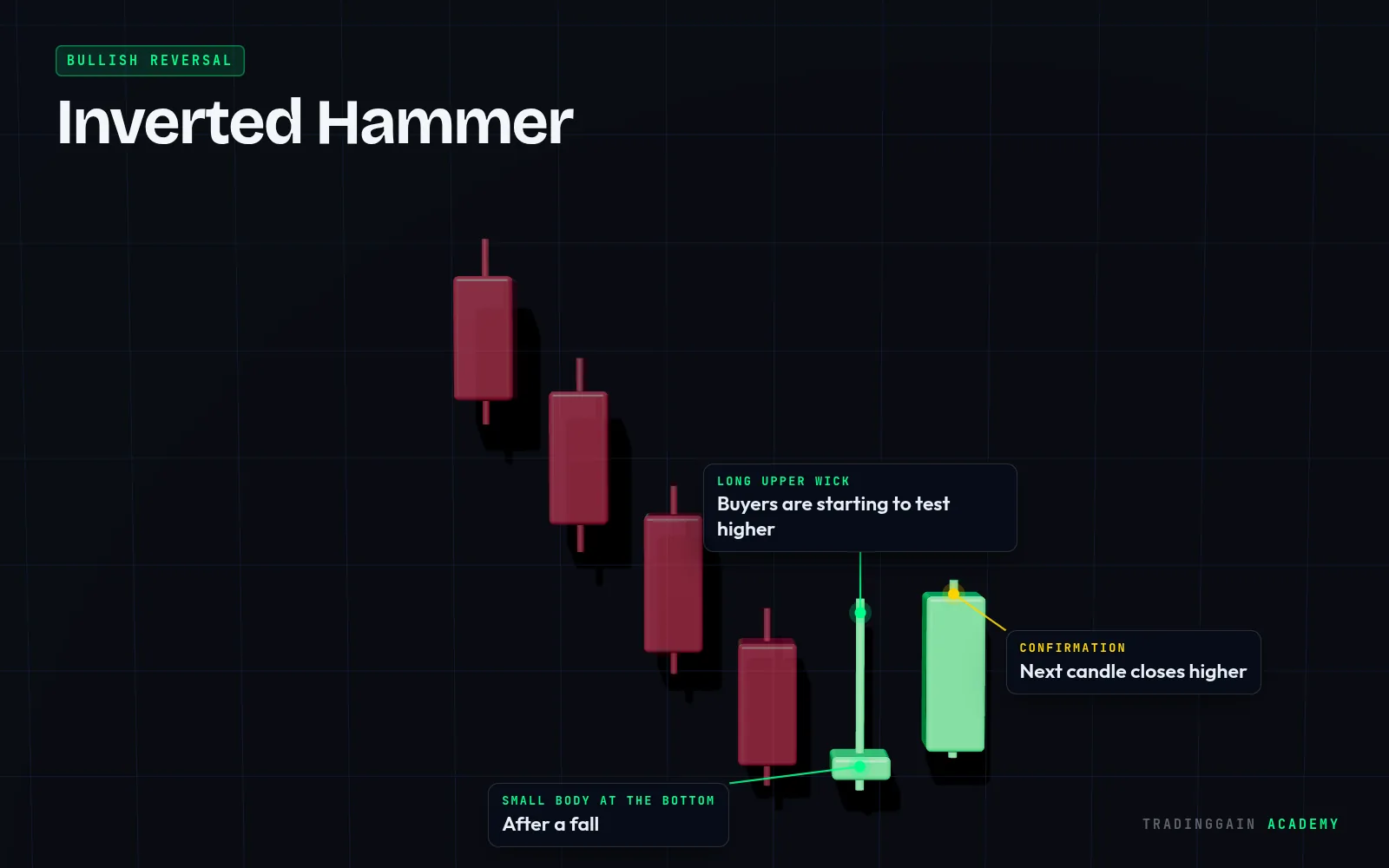
How to spot a Inverted Hammer
- Small body near the low
- Long upper wick, about twice the body or more
- Forms after a fall
What the Inverted Hammer tells you
After a decline, buyers tried to push price much higher. They could not hold all of it, but the attempt shows selling pressure is weakening. It needs a strong confirmation candle more than a normal hammer does.
How traders use it
- Wait for the next candle to close above the inverted hammer high
- Enter after confirmation
- Place the stop below the candle low
Common mistakes
- Mistaking it for a shooting star: the location decides
- Buying without confirmation
- Ignoring the higher-timeframe trend
 See it on a real chart · EP 01Candlestick Patterns for BeginnersWatch the free lesson →
Questions about the Inverted Hammer
Is an inverted hammer bullish?
It is a possible bullish reversal after a decline, but it is weaker on its own than a hammer and needs confirmation.
Inverted hammer vs shooting star?
They look the same. An inverted hammer appears after a fall (bullish); a shooting star appears after a rally (bearish).
For education only, not financial advice. The chart is an illustration of the pattern, not real market data. No pattern works every time; always use a stop-loss.